Published on
May 23, 2026

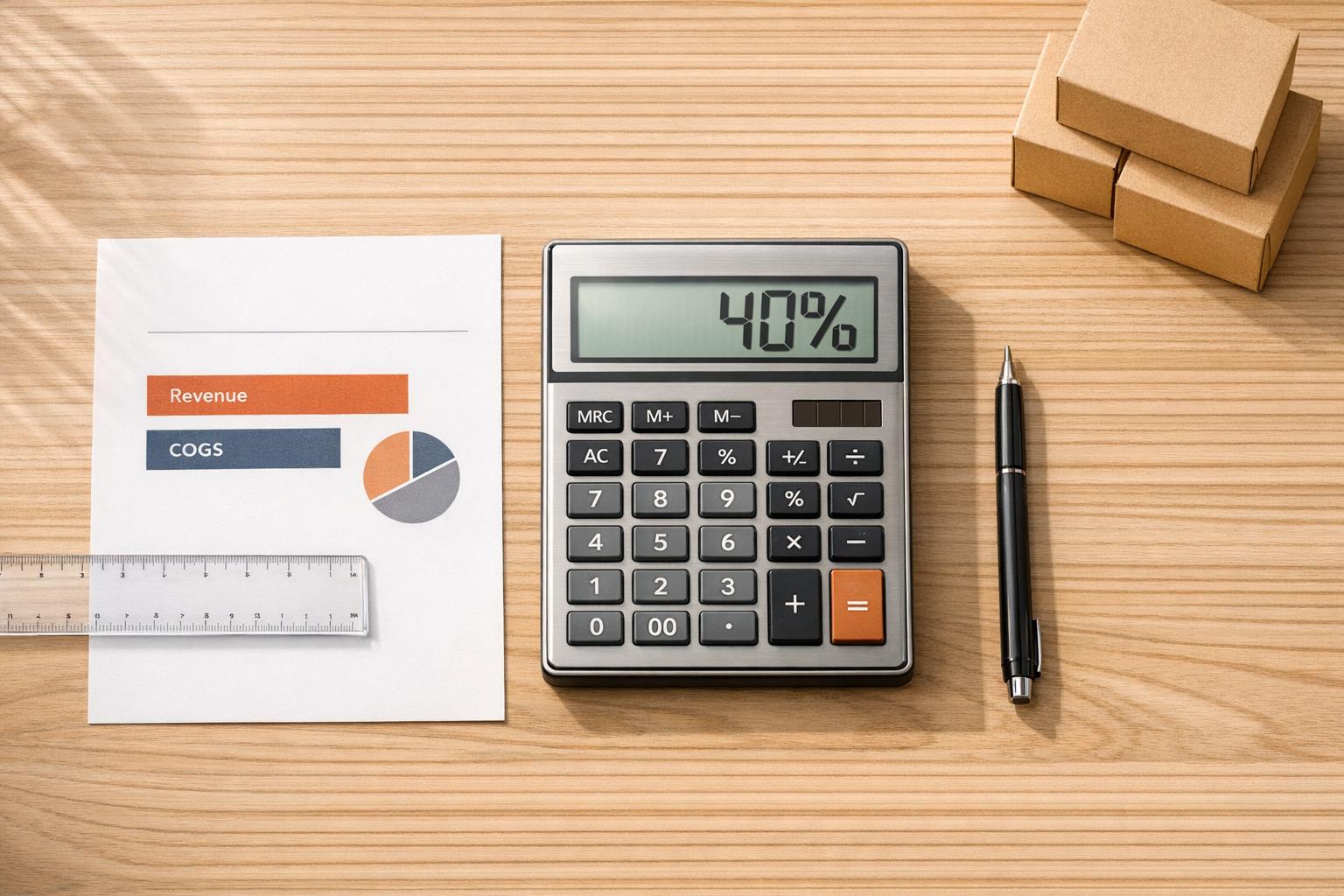
A gross margin calculator helps you quickly measure how much revenue remains after direct product costs are covered. That makes it a practical tool for pricing decisions, inventory planning, and everyday financial analysis. If you sell physical goods, manage an ecommerce store, or review product performance across categories, knowing your margin can prevent underpricing and reveal where profitability is slipping.
This calculator works with three common planning needs: finding gross profit and gross margin from revenue and cost of goods sold, estimating the revenue required to hit a target margin, and identifying the maximum COGS you can afford while staying on goal. The formulas are simple, but using a dedicated tool reduces manual errors and speeds up decision-making.
Unlike broader profit metrics, gross margin focuses only on revenue and direct costs. That makes it especially useful when comparing products, suppliers, or pricing models. A strong gross margin calculator can help businesses protect healthy unit economics before operating expenses even enter the picture.
Whether you're testing new prices or reviewing supplier costs, this gross profit and margin tool gives you clean, readable answers with straightforward validation and no extra clutter.
Gross profit is the dollar amount left after subtracting cost of goods sold from revenue. Gross margin is that same result expressed as a percentage of revenue. For example, if you make $2,000 in revenue and your COGS is $1,230, your gross profit is $770 and your gross margin is 38.50%. The percentage is often more useful when you're comparing products, pricing strategies, or sales channels.
No. Gross margin only looks at revenue and direct costs tied to producing or purchasing the product sold, which is your cost of goods sold. It does not include operating expenses such as payroll, software, shipping overhead, rent, or marketing unless those costs are specifically treated as part of COGS in your accounting. That’s why gross margin is helpful for product-level pricing, but it doesn’t tell the full profitability story on its own.
Because the formula breaks at 100%. To find revenue needed for a target margin, the calculator uses COGS divided by 1 minus the target margin as a decimal. If the target is 100%, that denominator becomes zero, which makes the calculation impossible. In practical terms, a 100% gross margin would mean having costs of zero, so the tool correctly blocks that input and asks for a valid target below 100%.