Published on
November 5, 2025

Starting a business is a thrilling journey, but the financial side can feel like a maze. That’s where a tool to measure return on investment becomes your best friend. Whether you’re an entrepreneur with a fresh idea or a small business owner scaling up, understanding your financial health is key to making informed choices.
Every dollar you invest in your venture should work toward growth. A business profitability tool helps you see if that’s happening by breaking down revenue, costs, and net gains. It’s not just about numbers—it’s about gaining confidence to pitch to investors or adjust your strategy. Imagine having a clear picture of your progress without hours of manual math. That’s the power of a well-designed calculator tailored for startups.
Beyond just crunching numbers, visualizing your financial trajectory can inspire action. Tools that offer graphs or summaries let you spot trends over time, helping you plan for the future. For anyone building a dream, having access to such insights for free on the web is a game-changer. Take control of your business story today by exploring how your investments stack up.
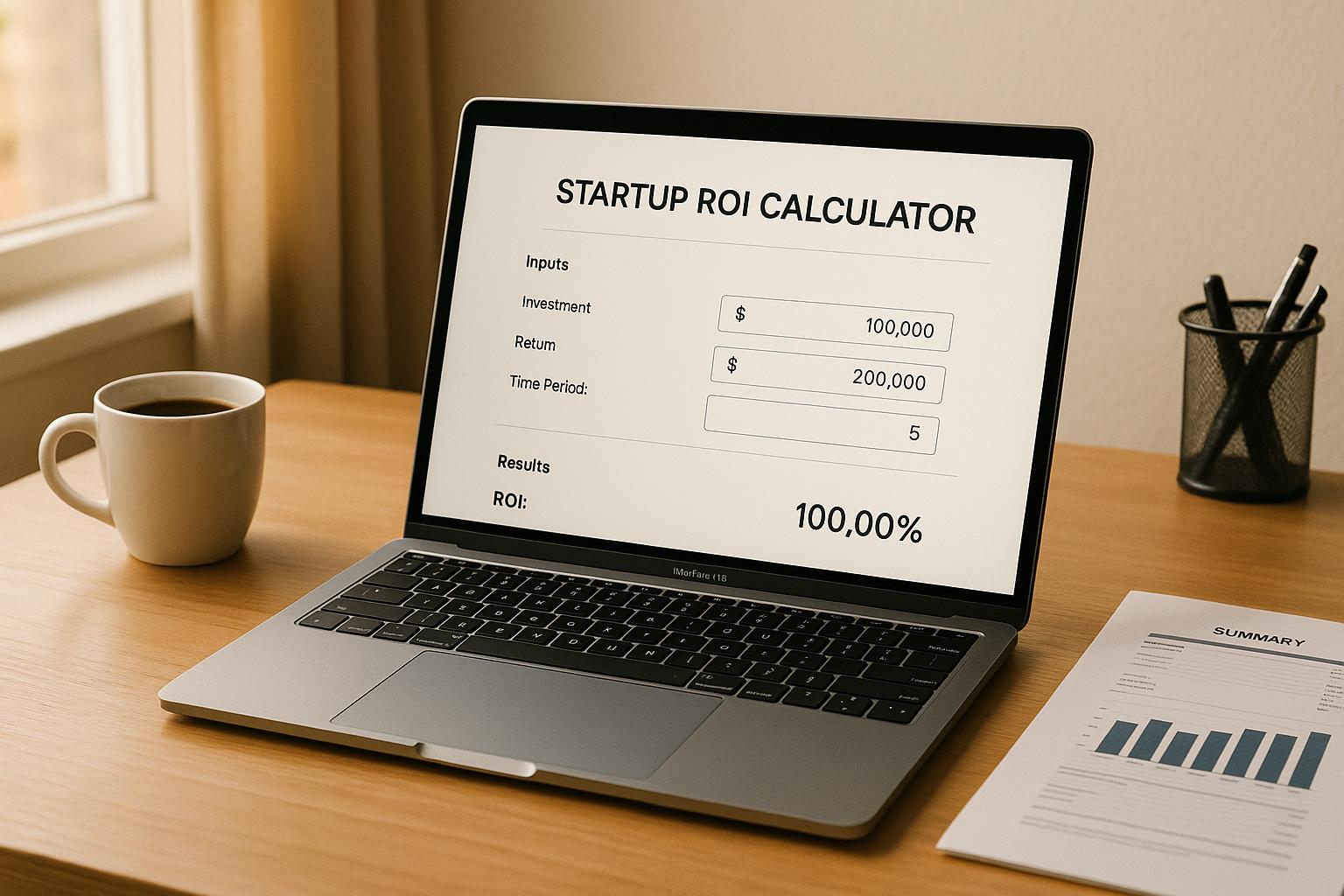
ROI, or Return on Investment, is a way to measure how much profit you're making compared to what you've put into your business. Think of it as a report card for your financial decisions. Our calculator uses the formula [(Total Revenue - Total Costs) / Total Investment] * 100 to give you a percentage. A positive number means you're earning more than you're spending, while a negative one signals a loss. It’s a quick snapshot to help you see if your venture’s worth the effort or if you need to pivot.
No worries if your ROI comes back negative—it just means your costs are outweighing your revenue right now, and that’s okay for many early-stage startups. Our tool will display a clear message explaining this, along with tips to improve your numbers. If you accidentally input a zero investment, we’ll prompt you to add a valid amount since ROI can’t be calculated without it. We’ve built in these guardrails to keep things user-friendly and helpful, no matter your situation.
Our Startup ROI Calculator gives you a solid starting point based on the data you provide, but remember, it’s not a crystal ball. The projections and graphs are meant to visualize trends using your inputs, so their accuracy depends on how realistic your numbers are. Use it as a guide to understand potential outcomes and play around with different scenarios. For major decisions, though, it’s always smart to chat with a financial advisor to factor in market changes or unexpected hurdles.