Published on
June 30, 2026

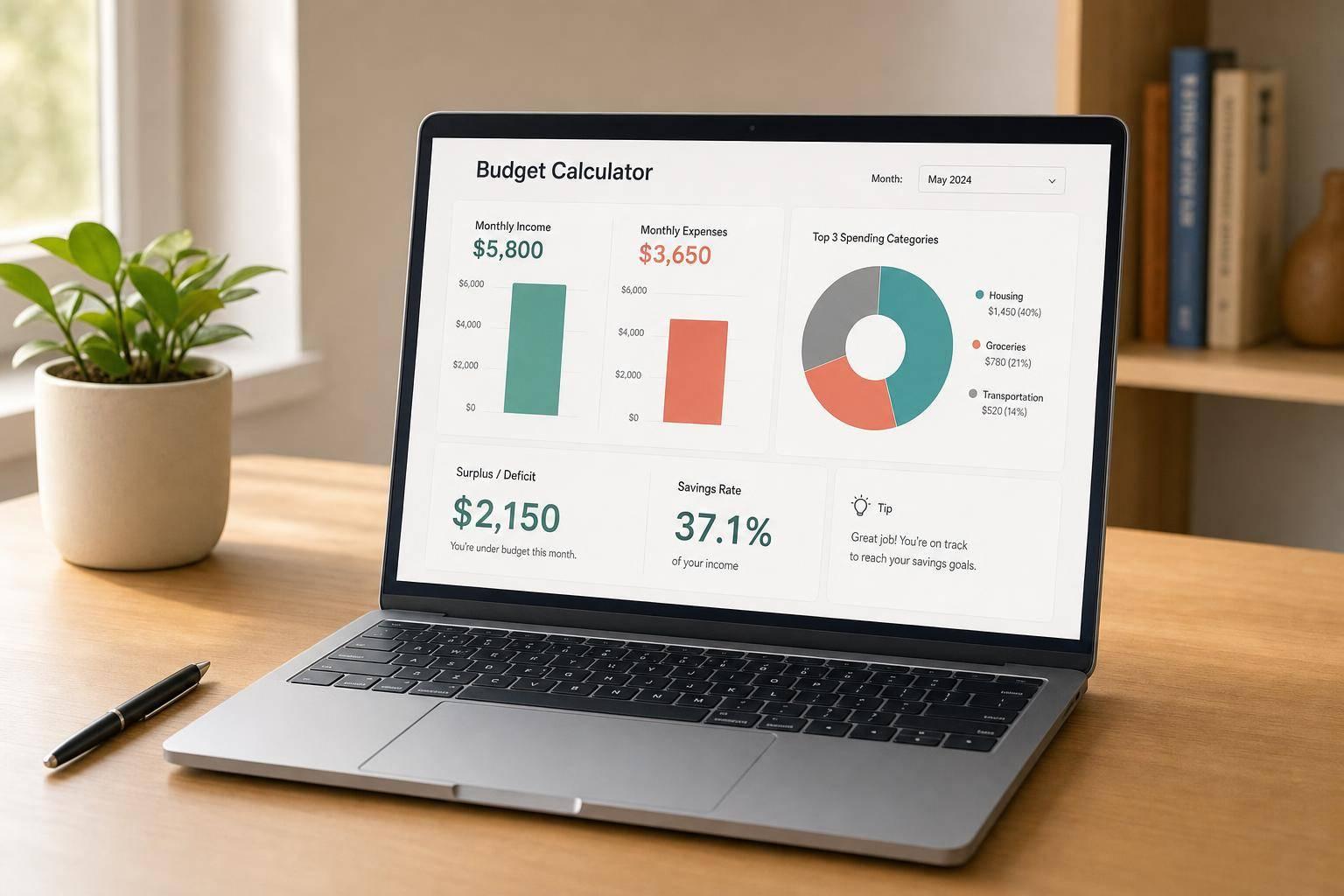
A budget calculator can make personal finance feel much less complicated. Instead of guessing where your paycheck goes, you can compare income and expenses side by side and get a realistic picture of your monthly cash flow. That’s especially helpful when bills vary, spending creeps up, or you’re trying to save more without cutting everything you enjoy.
This tool is designed for everyday budgeting. You can enter your main income, add any extra earnings, then list common costs like housing, groceries, insurance, transportation, healthcare, and entertainment. If some amounts are weekly, biweekly, or yearly, the calculator converts them into monthly values automatically so the totals stay easy to understand.
A good monthly budget calculator does more than total your bills. It shows whether you have money left over, how large your savings rate is, and which categories take the biggest share of your income. That makes it easier to adjust spending, set realistic savings goals, and build a stronger household budget over time.
Use this budget planner as a practical estimate for monthly decision-making. It’s fast, clear, and built to help you feel more in control of your finances.
The tool converts every entry into a monthly equivalent so you can compare everything on the same basis. For example, weekly amounts are typically multiplied by 52 and divided by 12, biweekly amounts by 26 and divided by 12, and yearly amounts by 12. That gives you a consistent monthly view, which is much easier to use for budgeting.
That’s completely fine. Optional income and expense fields can be left blank, and the calculator treats them as zero. This keeps the tool simple to use and helps you build a budget even if you don’t have every number in front of you yet.
It’s very useful for everyday planning, spotting spending patterns, and understanding whether your income covers your expenses. That said, it’s still an estimate-based budgeting tool, so the results are only as accurate as the numbers you enter. It works best as a monthly planning guide rather than a replacement for detailed financial advice or full accounting records.