Published on
July 27, 2026


If I want a cleaner sale process, I need a written breach response plan before diligence starts. Buyers treat cyber issues as a price, timing, and legal risk issue. Weak records can lead to 3% to 25% valuation cuts, added holdbacks of 10% to 20% for 12 to 24 months, and extra legal review.
Here’s the short version:
A few numbers set the stakes:

Data Breach Impact on M&A Deals: Key Stats for Exit Planning
| Area | Weak response | Deal-ready response |
|---|---|---|
| Diligence | More Q&A, more delays | Fewer follow-ups |
| Legal review | Counsel rebuilds facts by hand | Counsel reviews a clean file |
| Deal terms | More escrow pressure, more carve-outs | More standard terms |
| Buyer trust | Lower | Higher |
| Valuation talks | More downside pricing | Less uncertainty |
Bottom line: if I can show a clean incident history, tested response steps, and clear cost planning, I make it easier for buyers to assess risk without slowing the deal.
That gap turns cyber response into a legal workstream during diligence.
If a company starts a sale process without organized incident records, buyers' counsel has no clean way to judge hidden legal exposure. Before they can lock in reps, disclosure schedules, and risk allocation, they need a clear picture of past incidents: what happened, what data was involved, which systems were hit, and how the company responded. When that record isn't there, lawyers end up piecing the story together in the middle of a live deal. That slows signing, adds legal cost, and makes buyers more cautious. And that caution often shows up in pricing and deal terms.
State breach-notification laws, along with rules such as HIPAA, GLBA, and CCPA/CPRA, force counsel to confirm what data was exposed, where it was exposed, and who needed notice.
If it's not clear whether California residents' data or HIPAA-covered data was involved, counsel can't say with confidence whether the company sent the notices it had to send. That usually leads to outside consultations, added fact-finding, and a 50-state notice analysis built from incomplete facts. In plain English, the legal team is trying to answer hard compliance questions without a full file.
These gaps don't stay buried for long.
When a company says "yes" to prior incidents but only uploads vague email threads or a handful of IT tickets, buyers usually respond with detailed follow-up requests. In some cases, they also bring in third-party forensic reviewers. The worst gaps are often the most basic ones. Missing intake logs, timelines, and ownership records force buyers to ask simple but deal-slowing questions: who handled the event, when was it contained, and were notifications sent on time?
Each missing piece creates another round of questions, another document request, and another review cycle.
Advisory data indicates that cybersecurity problems delay 62% of M&A deals, and 73% of dealmakers say they would walk away if undisclosed cybersecurity issues or breaches were identified during diligence.[1]
The difference shows up fast in diligence, timing, and deal terms.
| Dimension | Informal / Ad Hoc Response | Deal-Ready Response |
|---|---|---|
| Timeline | Slow; requires manual reconstruction, multiple Q&A rounds, possible forensic review | Fast; organized documents delivered quickly, buyer review moves efficiently |
| Counsel effort | High; ambiguous facts, repeated analyses, difficulty confirming compliance with state laws and HIPAA/GLBA/CCPA/CPRA | Low; clear timelines, documented legal decisions, straightforward notification confirmation |
| Valuation pressure | Higher risk discounts, aggressive sensitivity modeling, buyer requests for downside protection | More stable pricing, fewer arguments that cyber risk is a "black box" |
| Escrow risk | Higher escrow percentages, longer durations, cyber-specific holdbacks | More standard escrow terms, less pressure on risk allocation |
| Buyer trust | Low; management appears surprised by questions, records are inconsistent | High; management presents a mature process, data aligns with investor expectations |
The fix is straightforward: a documented incident response program that buyers can review fast.
To cut legal back-and-forth during diligence, your incident response program needs to do more than stop an attack fast. It also needs to leave behind a clean, reviewable record.
A deal-ready incident response program helps contain breaches, of course. But just as important, it creates the documents and governance proof a buyer wants to see. That includes written procedures, clear ownership, escalation rules, retained evidence, board reporting, and tested remediation. In plain English: the program should work well in the middle of an incident and hold up when someone reviews the file months later.
Build the plan around the NIST SP 800-61 phases: Preparation, Detection and Analysis, Containment/Eradication/Recovery, and Post-Incident Activity. For each phase, spell out the trigger conditions, owners, deliverables, and timing expectations.
Severity should be classified by business impact first. Look at things like sensitive data exposure, customer systems being hit, material downtime, regulatory deadlines, or transaction risk. That lens brings in the CFO and legal team early instead of leaving IT to carry the issue alone until it gets worse.
Post-incident review is often skipped. That's a mistake. It's the point where lessons learned and control fixes get written down. And in exit prep, that's often the missing piece.
A simple RACI model clears up confusion during both incidents and diligence. Each group should have a defined lane:
Board reporting also matters. It shows cyber risk is being handled as a governance issue, not just an IT issue. If the company can point to board decks or risk committee updates showing incidents were escalated and remediated, buyers have less reason to worry that material risk stayed hidden from the top of the organization.
The goal is simple: make it easy for the next person - outside counsel, a buyer, or a CFO - to verify what happened in minutes, not hours. Keep these records for 3 to 5 years so diligence teams can see the program has been used and tested over time:
| Record Type | What It Shows Buyers |
|---|---|
| Incident logs and case management records | Dates, severity, scope, resolution, and trends over time |
| Incident response playbooks and current IR policy | Written procedures exist and are maintained |
| Post-incident reports and lessons-learned documentation | Weaknesses are identified and addressed, not ignored |
| Remediation trackers with completion status | Issues are closed, not just flagged |
| Tabletop exercise agendas, scenarios, and outcomes | The plan is tested in practice, not just on paper |
| Board and committee cyber updates | Executive oversight is real and documented |
| Insurance summaries and vendor breach procedures | Third-party exposure and financial coverage are understood |
Those records should be dated, standardized, and easy to search. If they're linked cleanly and stored in one place, follow-up questions drop fast and diligence moves with less friction.
Once the process is documented, the next step is to connect it to cost planning and deal workstreams.
When the incident file is clean and ready for review, buyer counsel can size up cyber exposure much faster. They use the data room to trace what happened, what systems were hit, what data was involved, and how the company responded. Standard fields like incident date, type, affected systems, data types, impacted records, detection time, containment time, remediation, cost, and notice status make that work a lot easier.
That changes the diligence conversation in a practical way. Instead of asking for every breach from the last five years, buyer counsel can go straight to the 01/15/2025 ransomware incident and ask about remediation costs and follow-up steps. Fewer fishing-expedition questions usually means fewer Q&A rounds and a shorter path to signing.[2][6]
Clean records also make privacy and security reps and warranties easier to negotiate. If the seller can point to a complete incident register, closed regulatory correspondence, and written remediation steps, buyer counsel is more likely to accept targeted, time-limited reps instead of broad language saying there were no breaches at all. That often leads to fewer exceptions, shorter survival periods, and less back-and-forth in the process.[3]
Buyers don't just look at breach metrics as numbers on a slide. They read them as proof that cyber risk is being managed instead of ignored. They want to see that someone owns the program, issues are tracked, and the company gets better over time.
The main metrics to show are:
The key is how you present them. Show trends, not one-off snapshots. Link each improvement to a specific control change and to the board or risk committee decision behind it. When buyers can see that metrics shape governance decisions, and governance decisions shape budget, the program looks managed instead of paper-deep.
It also helps to be plain about open gaps. A legacy system still waiting on segmentation, or an MFA rollout that is still underway with a committed completion date, often reads as honesty rather than a red flag. Buyers know no program is perfect. What matters is whether the company knows where the gaps are and has a plan to close them.[4][6]
You can see the difference pretty quickly in diligence.
| Diligence Factor | Poor Documentation | Strong Documentation |
|---|---|---|
| Legal review time | Longer - counsel reconstructs incident history from fragmented records | Shorter - buyer reviews a coherent incident file and remediation record in one place |
| Reps and warranties complexity | More exceptions, broader qualifiers, extended negotiations | Cleaner discussion backed by evidenced controls, testing, and past response actions |
| Escrow or holdback risk | Higher - unresolved cyber questions increase perceived closing risk | Lower - documented response maturity reduces uncertainty about hidden liabilities |
| Regulatory risk | Higher when breach notification or retention obligations are unclear | Lower when the company shows tested response, documented notifications, and clear ownership |
| Buyer confidence | Lower - gaps suggest unmanaged exposure or weak governance | Higher - organized evidence signals control, accountability, and readiness |
The practical takeaway is simple: breach planning doesn't remove cyber risk. It makes that risk easier for buyers to read, which lowers uncertainty and gives both sides a firmer basis for pricing and deal terms.[5][7]
Once your response process is on paper, the next step is simple: turn breach risk into dollars.
Cyber incidents can get expensive fast, and many founders don't see the full price tag until they're dealing with one in real time. In the U.S., the average data breach cost hit $10.22 million in 2025. That's an all-time high and about 2.3x the global average.[8][13]
Build a line-item model that covers detection and escalation, notification for customers, employees, and regulators, post-breach response, and revenue loss tied to downtime, churn, and reputational damage. Then plug midpoint and worst-case scenarios into your cash flow model and exit forecast.
U.S. benchmark ranges give you a starting point:
This isn't just a finance exercise. It shows management has put numbers around downside risk and can pay for an orderly response without throwing operations off course or clouding EBITDA visibility.
That same model should flow straight into the forecasts and diligence materials buyers will review.
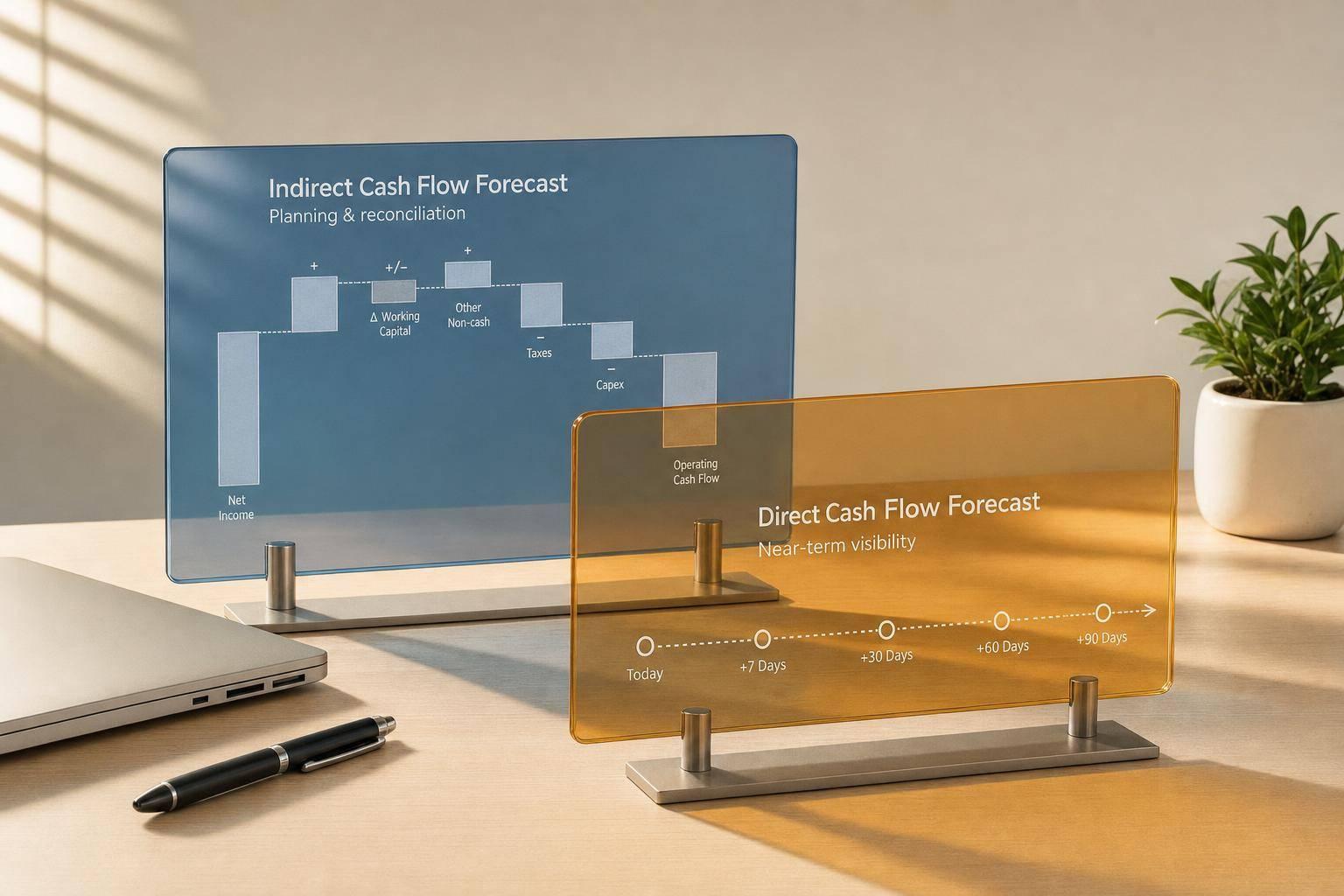
Breach planning should connect to the same financial models buyers already expect to see. That means showing how response spend, downtime, churn, insurance timing, and revenue delays hit monthly cash flow, not just annual earnings.[14]
Phoenix Strategy Group can help founders tie incident-response assumptions to FP&A, cash flow forecasting, and M&A prep. When cyber readiness lives inside the financial model instead of sitting off to the side in IT, management can explain risk in plain English. That gives buyers a cleaner story during diligence and deal talks.
Before a sale starts, a breach response plan should give buyers a clear, steady process for handling security incidents.
That plan should spell out roles and responsibilities, escalation steps, pre-drafted communication templates, and proof that the plan has been tested and updated to match different legal notification timelines.
Why does that matter? Because it can cut delays, ease diligence concerns, and help build buyer trust.
Poor cyber records can drag down valuation and weaken deal terms because they create doubt around hidden liabilities. When buyers aren’t sure what they’re inheriting, they often protect themselves with price cuts, escrow holdbacks, or longer indemnity periods.
If past breaches were never disclosed - or the paper trail is thin - that can put the whole deal at risk. On the flip side, strong incident response records and well-organized security documentation help buyers feel more at ease and can support a higher valuation.
Translate technical audit findings into dollars and cents. Put a price on remediation work, possible regulatory fines, and brand damage, such as customer churn or deals that slip away, then reflect those numbers in valuation changes, escrow holdbacks, or longer indemnity periods.
It also helps to build a cyber risk integration budget into the model and add a 10% to 20% contingency reserve for surprise post-closing costs. That way, the exit valuation reflects a risk-adjusted price instead of a liability no one fully priced in.