Published on
June 30, 2026

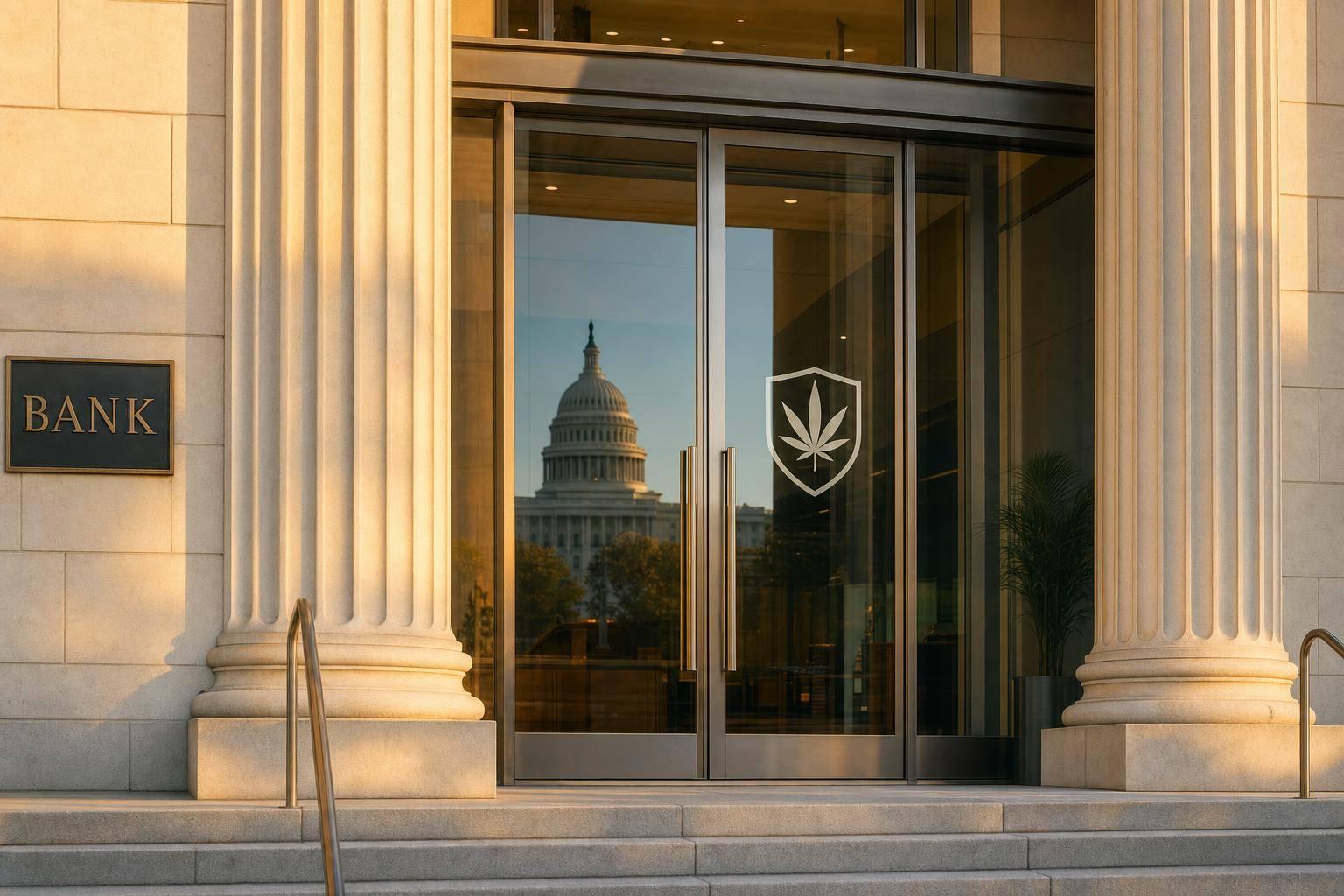
A bipartisan group of senators and House members has reintroduced the Secure and Fair Enforcement Banking Act of 2026, renewing an effort to give banks legal clarity to work with state-legal medicinal and recreational cannabis businesses.
The legislation comes after the federal reclassification of medical cannabis from a Schedule I to Schedule III drug. Sen. Jeff Merkley, D-OR, introduced the measure alongside Sens. Elizabeth Warren, D-MA, Lisa Murkowski, R-AK, and Steve Daines, R-MT. In the House, Rep. David Joyce, R-OH, introduced companion legislation with seven colleagues.
If enacted, the bill would bar federal regulators from prohibiting or discouraging banks from serving legal cannabis businesses and companies that provide services to the cannabis industry, including marketing firms and legal counsel. It also would stop regulators from terminating or limiting a bank’s deposit insurance solely because it serves cannabis or cannabis-adjacent businesses, or from incentivizing a bank to cut off those services.
Merkley said the proposal is aimed in part at addressing the risks tied to cash-heavy operations.
"Legal cannabis businesses operating in all-cash is dangerous for our communities - encouraging criminal activity like robberies, money laundering, and organized crime", Merkley said in a prepared statement last week. "It’s past time we ensure legal businesses can access the financial services they need to help keep their employees, their businesses, and their communities safe."
According to the Financial Crimes Enforcement Network’s most recent numbers from 2024, 816 banks currently serve cannabis-related businesses, more than ever before. Even so, that represents only about one-fifth of U.S. banks. The limited access to banking has historically left many cannabis businesses operating in an all-cash or cash-heavy capacity.
The bill’s protections would also extend to hemp and hemp-derived cannabidiol-related businesses.
State legalization has expanded over three decades. California became the first state to legalize cannabis for medical use in 1996, and dozens of states have since followed. Colorado and Washington were the first to legalize cannabis for recreational use in 2012, and 22 states plus the District of Columbia have since done the same.
The push for federal banking reform dates back more than a decade. The original bill, called the Marijuana Business Access to Banking Act, was first introduced in 2013 by Reps. Ed Perlmutter, D-CO, and Danny Heck, D-WA. That measure became SAFE Banking in 2017 and has passed the House seven times, but it has never passed the Senate.
American Bankers Association President and CEO Rob Nichols backed the latest version of the bill.
"For years, the conflict between state and federal cannabis laws has left many cannabis businesses operating in cash, creating significant public safety risks in states where it’s been legalized", Nichols said. "The SAFE Banking Act would provide banks with a clear federal safe harbor, allowing them to serve state-legal businesses while increasing transparency for law enforcement and reducing risks to the public."