Published on
March 25, 2026

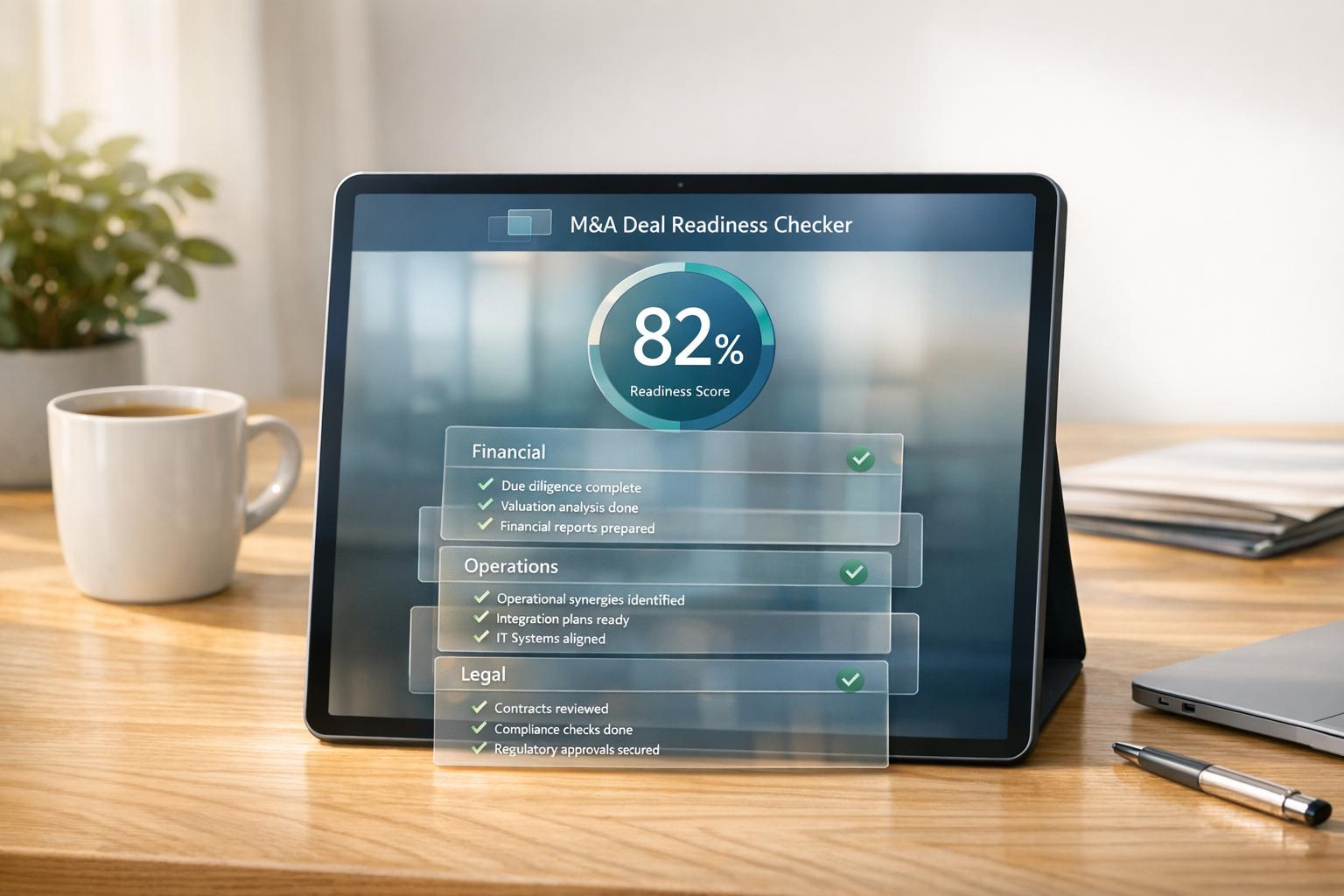
When the opportunity for a merger or acquisition arises, being prepared can make or break the deal. Many business owners underestimate the importance of evaluating their company’s standing across key areas like financial clarity, legal protections, and operational consistency. That’s where a tool to assess your preparedness for mergers and acquisitions comes in handy. It offers a structured way to identify strengths and weaknesses, ensuring you’re not caught off guard during negotiations.
A potential partner or buyer will scrutinize every aspect of your business, from audited financials to intellectual property rights. Without a clear understanding of where you stand, you risk losing leverage or even derailing the process. By taking a few minutes to analyze your business’s foundation, you gain insights that help you address gaps proactively. Whether it’s tightening up contracts or stabilizing cash flow, these steps can significantly boost your appeal to investors or acquirers.
Don’t wait for a deal to fall apart due to overlooked details. A quick assessment can provide clarity and direction, helping you approach any transaction with confidence and a solid plan.
Our tool looks at four critical pillars of readiness for a merger or acquisition: financial transparency (like whether you have audited statements), legal compliance (think contracts and IP rights), operational stability (consistent revenue or processes), and strategic alignment (a clear value proposition for potential partners). You’ll answer targeted questions in each area, and we’ll crunch the numbers to give you a comprehensive readiness score. It’s a straightforward way to see where you’re strong and where you might need to shore things up before entering discussions.
Your score is based on your responses to the checklist. For yes/no questions, each 'yes' contributes positively to your score, while for rating questions (1-5), higher ratings boost your percentage. We tally everything up and convert it into an overall readiness percentage, so you get a clear picture of how prepared your business is for an M&A deal. The report also breaks it down by category, so you’re not left guessing about what’s driving your results.
Absolutely. The feedback in your report is based on best practices for M&A preparation, drawn from real-world scenarios that business owners face during deals. While this tool isn’t a substitute for legal or financial advice, it’s designed to flag potential issues—like gaps in documentation or shaky revenue streams—and suggest practical steps to address them. Think of it as a starting point to get your ducks in a row before bringing in the experts for the heavy lifting.